
Enjoying the public lands of the American west
A rough and ready guide

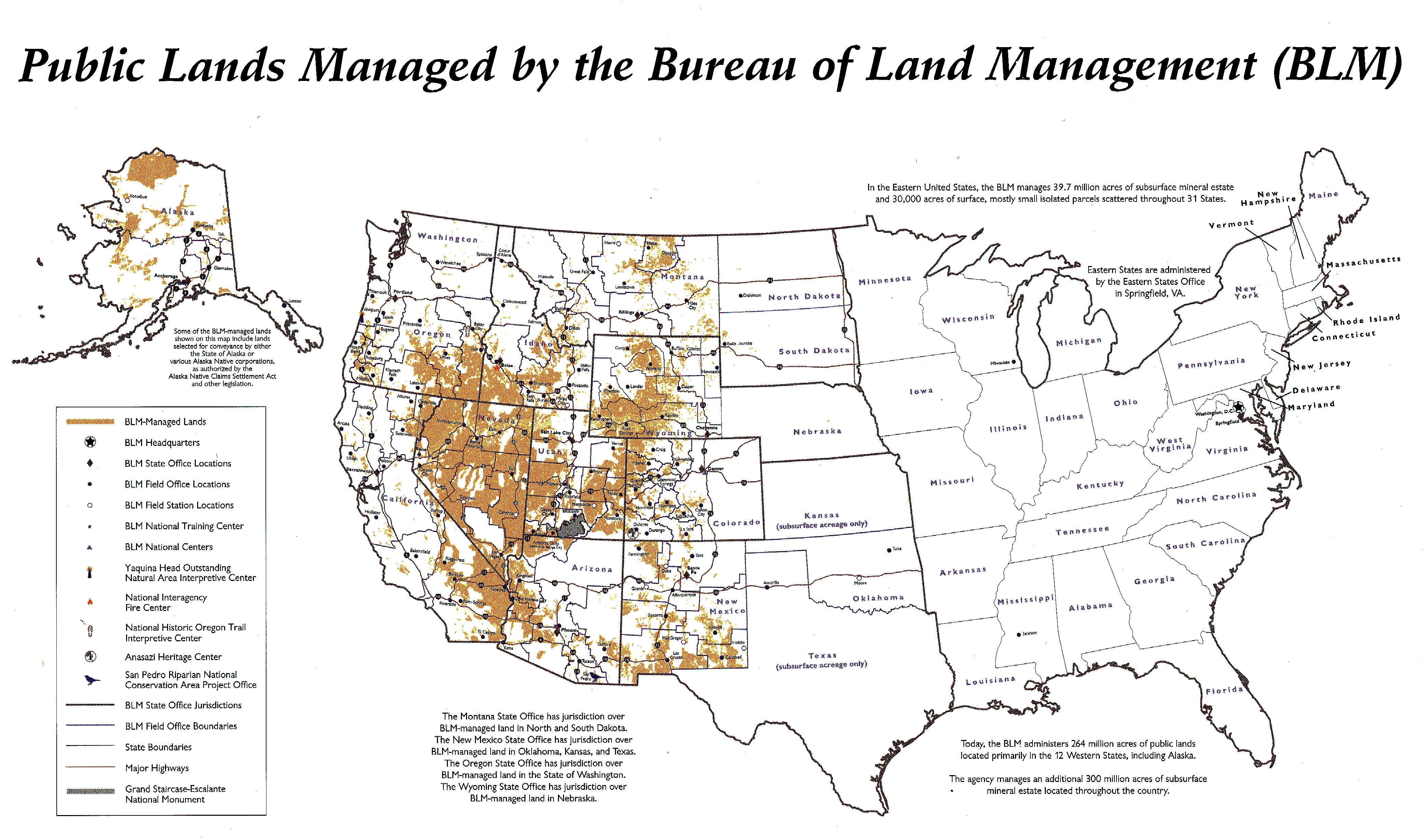
Bureau of Land Management
The least developed. Very few developed campgrounds but it is safe, legal and free to camp anywhere on these lands but you must have the right equipment. Almost entirely dirt roads. The very few developed campgrounds won't cost more than $7-15/night. It will probably only have picnic tables and a firering. The bathroom won't be a flush toilet and you will be lucky if there is water from a spigot.
Forest Service
Still very undeveloped but also safe, legal and free anywhere but you must have the have the right equipment. Almost entirely dirt roads but there will be many asphalt roads criss-crossing. You must camp on the dirt roads. More developed campgrounds than BLM land and won't cost more than $7-20/night. It will probably only have picnic tables and a firering. The bathroom won't be a flush toilet. More likely to have water from spigots but don't count on it.
National Parks
The most developed and the most crowded but extraordinarily beautiful and unique. Usually almost entirely paved roads but sometimes has some very interesting dirt roads. You must camp in the developed campgrounds. Picnic tables and firerings. Certain to have water and probably showers. Usually has a lodge, a simple store and a restaurant. Camping sites $25-35/night. Book in advance online; they sell out, especially in the summer. Be prepared for the campsite to be crowded and noisy especially in summer. Buy an annual pass for $80 and you get free entry to every park but you must still pay for camping. Sometimes you drop cash in a provided envelope into a metal container, take a stub from the envelope and put it on your dashboard at your campsite. Sometimes you have a printout from booking online. If you bought it online and don't have a receipt or something on your phone, just tell the ranger. The parks all have entrance huts with rangers. That's where you show your pass and iron out any issues about having already paid if you don't have a receipt or something on your phone. They give you a small map with hiking trails, roads and good information. The map attached to this email shows them as trees but many are quite large in the west. Excellent hiking.
State Parks
There are a lot of them in the west. You must camp in the developed campgrounds. Picnic tables and firerings. Probably will have water and showers but not always. Often close to cities and small towns, so you can get supplies too. Often beautiful and unique. Tend to be small. You can book in advance online; they sell out, especially in the summer near big cities but much less so in the countryside and near small towns.
My strategy has been to stay on BLM and Forest Service land almost entirely because it is safe, legal and free to camp but to visit every national park I can because they are really stunning. Some national parks I just drive around and hike a little but don't stay, often because there is BLM or Forest Service land very nearby. Sometimes I stay 1-3 nights in the national park. It all depends. You can leave your camp and go hiking; it will be safe. The concentration of world class national parks (and National Monuments, another very important category, but they are usually centered around something historical, small, and don't have camping) in southern Utah and northern Arizona is completely mind blowing.
Navigation
The DeLorme Gazetter state-by-state series is absolutely the only map book. They have latitude and longitude. They have togography. They tell you what each road type is. From busiest to least busy it is interstates (by and large I hate them; that's a long discussion), state road, county road, dirt road. Most importantly, they tell you land ownership, so you know where the BLM and national forest land is and national parks are. Get a compass and know how to use it. I only use Suunto. Get a good one. If you don't lose it, they will last a lifetime. Forgetting/losing small things at camp sites happens. Don't think you will be able to rely on your phone. The west is so vast there are huge areas with no cell coverage, especially in the back country.